Showing posts with label English. Show all posts

I turned 40 years old.

Kafka died at the age of 39. I outlived him. So did Gregor Samsa's insect.

It's a bit intimidating to have lived four decades. I mean, in comparison to

- Chekhov, who died at the age of 44,

- Van Gogh, who died at the age of 37, 

- Caravaggio, who died at the age of 38,

- Orhan Veli, who died at the age of 36.

I feel late.

Fidel was 33 years old at the Cuban revolution. Che was 31 at that time, then 38 when he desisted of the revolutionary struggle in Congo, and finally 39 years old when murdered in Bolivia. 

I feel lost.

At the age of 40, Nazim Hikmet was in prison for already for four years and would remain there for another eight years. 

Oguz Atay wrote Tutunamayanlar at the age of 37.

But there might still be hope. 

Lenin was 47 years old at the Bolshevik revolution.

Marx was 30 when the Communist Manifesto was published, but finished the first volume of The Capital at the age of 49.

Charles Chaplin did The Modern Times at the age of 47, the same age that Orson Welles did The Trial.

In any case, having lived - and having lived well - for forty years, is an achievement to celebrate.


I visited the Lisbon metro.

And you also should.

From my very first days here, I have been always amazed by the unique character that each metro station had, with tiles, sculptures, murals, writings and paintings. Finally this year I insisted on this desire and made a guided tour inside the stations.

At the time of this writing, there are four lines: Blue, Green, Yellow, Red. It is supposed to change with the inauguration of six new stations, which will also make one of the lines into a circular line. Before any of these changes, there was this beautiful website done by Metropolitano de Lisboa, called Art Tour. It's possible that they discontinue it, but basically it's an interactive self-guided tour divided into four parts (corresponding to the four lines).

We did four separate days of visits to the metro (I bought a daily pass each time), so we took a few months to finish this project. Each tour took us three to four hours (without any rush and with some breaks).

Due to the person that I am, obviously I made a list and personal ranking system, keeping track of how much I liked each station. I am not going to bore you with it, but let me give you a sense of what you should pay attention to.

 To start with, if you like urban immersion and if you already walked in the older neighborhoods a bit, then you must definitely visit the metro with some intention and attention. It really gives you a good sense of the city's soul.

But if you don't want to give it that much effort, then you can still do two things. One, you can visit a few key stations (see below). Two, you can be aware of your surroundings while using the metro and take a few minutes longer inside some of the key stations (see below).


* 


Here is how I would do it if you want to appreciate the metro and do it justice.


0) I am assuming you are not doing the Art Tour for some reason. (You should!) 


1) Go through the Green Line (Cais de Sodré >>> Campo Grande) and then take the Yellow Line (Campo Grande >>> Rato), getting off at each station and having a quick walk.

This tour will give you a taste of the first stations (with Maria Keil's artistic struggles during the dictatorship), as well as some of the extensions. It will be your baseline for everything else.

N.B. If the circular line is open, then do the whole thing. 

It should take you one day. (If you are running out of time, skip Baixa-Chiado, Arroios, Alameda, Areeiro, Roma, Campo Pequeno and Picoas.)


2) Visit the following stations with special care.

Each could be treated as a museum. Particularly in Lisbon where worthy museums are a rarity, these stations are definitely top sights to see.

Lumiar (Yellow Line): Clean and smooth from a distance but filled with details when you look closely, the artwork by António Moutinho, Marta Lima and Susete Rebelo is mesmerizing.


Parque (Blue Line): From the very first metro line inaugurated in 1959, it has some of Maria Keil's work. It passed through major renovations in 1994, when Françoise Schein and Frederica Matta transformed the station into a dense museum. It has the Universal Declaration of Human Rights meshed up with small icons from the colonial history and surrounded by humanist quotes. It's perhaps the only decent historical narrative you might find in official spaces, doing justice to the contradictions.


São Sebastião I (Blue Line): This is where to see the full capacities of Maria Keil. She did the first art work in 1959, went over it in 1977 (after the Carnation Revolution, that is), and then did the extension to the Red Line. This station is basically a tile museum. 


Chelas (Red Line): This was inaugurated in 1998 for the Expo, so it belongs to a different category of considerations. Here and perhaps for the only time, the architecture and the art work are fully integrated. In all other stations, the station is built and the art work comes after. In this case, the architecture of Ana Nascimento directly communicates with the tile work of Jorge Martins. It's simply stunning. 


A proper visit to each would take perhaps 30 minutes.

The stations do not communicate with each other, so you can visit them separately based on your life and calendar.


3) Now if you have more time and/or if you want to have mindful travel experience, here is a list of very pretty stations.


Cidade Universitária is a permanent exhibition by Vieira da Silva, no further words necessary.

Saldanha I (Yellow Line) is a wonderful painting-on-tile exhibition by Luís Filipe de Abreu.

Cais do Sodré has Alice's rabbit overwhelming you and himself.

Martim Moniz has an eclectic mixture of imperial past and multicultural present.

Bela Vista is almost in our top picks for the tiles by Querubim Lapa.

Oriente gives you an international painting exhibition launched for Expo 98.

Aeroporto introduces you to all the important figures from the Portuguese intelligentsia, successfully telling a story of national culture without relying on emperors and colonialism. While there, say hi to José Saramago from me, hiding at a not-so-used exit.


These are also very full stations. So do give yourself around 30 minutes to visit each. 


4) For the rest of the stations, just pay attention to (1) the entrances and stairs have tiles, each station is unique; (2) stop at the atrium and look around, there might be some art work deserving your attention; and (3) walk along the platform while waiting for the train and check what you might find.

Nothing very complicated, just watch your environment. It might maybe add 5 minutes to your existence in the station, but it will add to your day a substantial amount of beauty.

* 

Establishing this personal intimate connection with Lisbon, the city where I lived the most in my life, is a major achievement for me. So take this long post as my celebration.

I speak Spanish.

My theory is that, overall, Spanish and Portuguese are the same language (which is a corollary of my theorem that in Europe there are only five languages: Western European stuff, Eastern European stuff, Basque language, Hungarian and Finnish). Same alphabet, same reading direction, same language structure (subject, verb, object), thousands of shared words, etc.

So I have been dismissive of Spanish as a language distinct from Portuguese. But naturally that's just the elitist me talking, because that's not how anything works in real life.

In the last couple of years, I spent a bit longer time interacting with people from Latin America. Many of them are folks for whom Spanish is already a foreign language (on top of a few native languages), so Latin languages do not look natural at all to them.

The point is that I understand Spanish using my Portuguese but the Portunhol that I used to speak is not necessarily comprehensible for Spanish-speakers.

I decided to learn Spanish.

But I don't have time for classes and also hate self-learning. And I surely hated all language apps: they don't have any philosophy of pedagogy, rather they are driven by user engagement so they are more gamified and less useful.

Then I met Language Transfer.

It's a website. There is also an application. In any case, there is nothing app-like about it. 

It consists of 10-minute classes which are just audio files that you need to listen.

Besides the teacher, the classes are assisted by a student who is learning the language at that moment. Whenever there is a question, you are expected to pause the audio and do those exercises before the student. So each class takes maybe 15 minutes.

A complete Spanish course takes 90 classes. They also have Swahili, Italian, Greek, German, Turkish, Arabic and Japanese. (In these, the language of instruction is English. There is also an English course for Spanish-speakers.)

The underlying pedagogical philosophy is that we learn by getting used to things. (This is not only about language. It's about everything)  Language Transfer has the Thinking Method and a blog, but Victor Wooten's talk convinced me better:


If we agree with this, then there is a natural conclusion: The fastest and most solid learning method is by associating new information into existing information. That's why the base language matters and that's why the word "transfer" is important.

Language Transfer starts off with the same hypothesis as my theory above: If you speak English, then you have immediate access to a big chunk of Spanish. By consolidating it and by learning how to transfer (what to transfer, what not to transfer, what changes to implement while transferring), you can learn the language very quickly.

Another conclusion: What matters is to get the right intuition on the language you are learning. Therefore, one, vocabulary is not covered in the lectures, because that's just memorizing and not part of the learning process; and two, grammar rules only matter in as much as they reveal patterns in the language.

All of this further has implications on the curriculum: They discard entirely the linear order of learning one verb and all its conjugations, as well as the chunky sessions of memorizing names of kitchenware. Instead, they teach whatever is necessary to get the intuition right. The rest we will learn only in practice anyway (and will forget as we stop practicing, like I did with German).

To summarize, I am a big fan of Language Transfer.

I just finished the Spanish classes. We covered all tenses and conjugations. (We covered maybe a total of 50 words in total in order to do this.) This, in 90 classes of 15 minutes each.

So here is my celebration that I can now confidently say that I am fluent enough to survive sophisticated conversations in Spanish. 


I have a driver's license!

There is a recurring joke in the family about how I lived through all my young adulthood without a driver's license.

* 

The beginning is me moving to Istanbul for university. For trivial reasons, it was out of question to take the license at that time: it would be completely impractical to practice driving in said city. In the meantime years passed and I found it less and less relevant to invest my time on cars.

Of course, everyone else would insist that I would get the license. Arguments for: you never know, just in case, it's good to have it. Arguments against: millions of actual cases (of the "just in case") where it was absolutely beneficial not to be a driver. 

So the joke was that for every single reason in favor that my father would give, I would provide ten reasons against. And I would actively point them out. (We are now in a dinner, you know who can drink alcohol? Something needs to be picked up from somewhere, you know who will not be called to do it? Not to mention the inspections, the insurance and the accidents.)

Needless to say, I won this bet. My trolling skills overpowered my family's rationality.

*

Years later, something happened that was not supposed to happen.

My father got sick. He had to go to the hospital (or the clinic) more than once a week. Right after the initial stages of the illness, he stopped driving.

My mother drives, and there are taxis. They handled it just fine. They didn't need me. But something else mattered. Which is that I didn't matter. I could go to support them, I wanted to go support them. But we made a cost-benefit analysis. Destabilizing their newly established routine, stressing them about what I will eat, where I will sleep, if there is reasonable internet connection... all of this without a meaningful upside.

In a way, I never knew (of the "you never knew"). I could be doing some of the driving.

My father died in six months.

The next autumn I decided to take driving classes. 

*

This was more than a year ago. 

My travels and the class schedules have been slaloming between each other so it took me longer to get stuff done.


This was the car of the school. I'm putting it here for you to be aware and be kind with other learners.


Then, I failed the practical exam.

Strange, because until then the only exams that I failed were of STDs.

Then, I failed it again.

It was confusing, expensive and extremely impractical for my daily life.

Then, I relearned something about myself.

The reason I passed the theoretical exam so easily was that I had overprepared. I was doing 10 exams per day (30 questions each), for a period of an entire month. The total number of questions (they publish the entire repertoire online) is 400. And I was doing 300 questions per day. So the point is that when I went to the exam, there was no question that was not obvious to me. Which meant that I was extremely calm.

For the practical exam, the option of overpreparation was not available, because I cannot practice in my sparetime and on my own rhythm. I depend entirely on the classes from the driving school. But I hadn't done anything to compensate for this problem.

So now I was angry at myself not for failing an exam because a pedestrian showed up behind a car parked on the zebra crossing, but for not having followed through on something that I very well knew about myself. Self-awareness is useless if you don't use it.

Fed up of paying for repeat exams (which come with compulsory classes), I paid instead for redundant extra classes.

*

The exam was today. 

I was not overprepared. I was not confident. But I was also not too nervous.

Now, I have a driver's license.

This saga came to an end with a major victory. So here I am, committed to tell myself the history of the accomplishments of the year. It's a big one. 

I am ready to contribute to chaos, noise, pollution, and latent urban anger. Let me know if you need me. 


I got a jasmine!

I grew up in a jasmine-surrounded city. As a kid, I would leave early in the morning to go to school and I would go through the frontyards of the buildings filled with jasmines. In the weekends, I would go get some warm bread from the bakery, and the smell would overwhelm anyone passing on the street.

This was in a city of millions of inhabitants. 

There was one massive jasmine just around corner of our street. There was one literally at our front door. There was another one at the other end of the street. Several others were spread around the neighborhood. We all knew where they were. We would intentionally pick those routes.

Same game in the town of our summer house. When we walkted to the center, we knew which detours to make.

If you pick a few jasmine flowers and put it in water, your entire house will smell of jasmine. I learned this before I was a teenager, because in the weekends, my father would go shopping for food in the morning, bring some flowers, and then when we woke up for late breakfast, the house would be invaded/liberated by the jasmines.

I had always dreamt of having my own house having jasmines. I now live in a house which catches very little direct sunlight and I don't have a garden. I have a little cement terrace with some vases. Even so, I wanted to give it a try. I had asked the florist in the neighborhood, she said it wasn't impossible. 

This was years ago. 

I tried planting seeds. It didn't work.

I wanted to buy a small plant but the florist would never have it.

This all changed last week.


I went to the supermarket for my weekly grocery shopping. The florist was open. And there was this one single plant waiting for me. 

I rushed in to get it. 

We transplanted it to slightly bigger vase. 

Now it's here. 

It exists.

I am almost sure it won't survive the winter. But it is here now. I wake up, and I say Hi to it first thing in the morning. It is not impossible that it stays with us for a couple of weeks, at least.

In all accounts, this is a major victory. I know that "socialism in one terrace" doesn't work, but this is still a revolution of some sort!


I read Marx and Engels.

 I finished a major personal project that I started some fifteen years ago.

I read Marx and Engels.

I mean, I read the Marx and Engels. 

I read virtually everything that Marx and Engels wrote. And I finished this task just yesterday. 


Why did I do that? 

It was during my first years in university. I was searching for "what to do?". It wasn't really a strategy question but more like a mixture of "what am I supposed to do with my life?" and "how am I going to be useful to society?" and "how to save the world?". These are reasonable questions for a twenty-year-old, right?

Then I met many leftists groups.

So many of them. 

They all had their own versions of answers to these questions. And they were in simultaneous processes of splits, infighting, divergence, convergence, merge, alliance and so on.

Some were anti-Marxists, some were Marxists, some were real Marxists, some were the most real original Marxists.

I got very confused.

There is no way they could all be right at the same time.

I got so frustrated. Centuries of debates, and it seemed like none of the main debates came to a more or less consensual conclusion.  

So I decided that I wouldn't get carried away by the interpretations. Instead, I committed myself to reading the primary sources, establish my version of what Marx and Engels said, and only then get carried away by the interpretations.

This was in 2011. I stopped reading Marxists almost entirely, and started reading Marx.

What did I do, exactly? 

I read the works of Marx and Engels, in chronological order.

When I say works of Marx and Engels, I mean 

- everything that came out as a book in their time (the three Capitals, the early polemics like Holy Family, the later polemics like the Gotha program stuff, books on daily politics like Brumaire, the more textbook-like things including Anti-Dühring or the Feuerbach stuff of Engels, etc.)

- all the correspondence around the Communist League and the First International, 

- most of the manuscripts (1844 philosophical and economic stuff, Grundrisse, 1861-63 economic manuscripts),

- most of newspaper articles, 

- half of all the letters.

Basically, if you go over the list of all their works, I read everything that is bold in here, except the letters (which were impossible to find in compiled form, unless you pay a fortune to MECW volumes).

What did I learn?

I learned that most Marxists and almost all anti-Marxists have no idea what Marx was saying. They generally start with their opinion, then try to find that opinion in Marx's writings.

Most of the time, when someone says "Marx said this." or "Marx was like such and such.", they are quote-mining at best or are referring to an interpretation of an interpretation of an interpretation.

More concretely, I can share with you a few observations:

-  There is a lot of context that we are missing. Half of their work is about arguing against other people to make a specific criticism. Most of the quotes that people pick were not written as general statements, but rather as specific comments to specific nonsense of the time. So they are not "quotable". These people were writing thousands of pages of polemics against each other; and most of the times it's not possible to reduce their meaning into a tweet just because a sentence sounds cool.

-  Also in terms of context, we are missing terminology: I needed a lot of unlearning because I was reading the texts as if they were written in today's language. But words like "organic" (organ-like), "objective" (related to an object) and "contradiction" have different meanings today than they did for Marx and Engels. 

Since more than half of their work is about criticizing political economy, they also use a lot of that framework. They were part of an ongoing debate, so they use contemporary terminology. Stuff like "most advanced mode of production" have a sense of "progress" that is carefully defined in terms of "productivity of labour", and here "productivity" is defined as "produces surplus value for someone else". It really helps to know what the words stand for, if you want to understand what the text tries to transmit. 

- One important thing I learned is the method. The content changes because the context they address is changing. If you pick quotes from the books on German peasant struggles and on the critique to the Erfurt program, you will find contradictory sentences. That's because they are talking about different things. The constant here is the historical materialist method. They apply class analysis and dialectics to existing situations and reach concrete conclusions.

- Both Marx and Engels are very much focused on what would actually work. They do very little debate on ideals and their vision. Their takes on state and centralized power structures should be read with this lens. Equally, their insistence on abolishing private property of means of production is because that's the only way exploitation could be stopped.

It is a straw man fallacy to criticize the Soviet Union (or any other experience) for not being Marxist enough. Marx himself didn't know how to execute socialism, nor was he very worried about figuring that out. The writings around alienation, philosophy of right and the Paris commune point to the depth of his thought process; but again, Marx and Engels were trying to solve real-life problems so I think they would be happy with all kinds of experimentation. 

I am also sure that Marx would be grumpy about any attempt, and Engels would cheer up with almost any attempt.

- Engels is much more accessible and a lot friendlier than Marx. Engels' texts are fun and simple. For the same reason, Engels' presentations are less rigorous than Marx's works. Marx read all of them so there is nothing inconsistent in them. However, keep in mind that they were given the task of writing the manifesto for the Communist League. Engels wrote something (The Principles of Communism), gave it to Marx; Marx looked at it and said "Wonderful, let me go over it." and then wrote something completely different. So it's useful to distinguish Marx and Engels if you want to understand what's actually going on.

- Marx is not a positivist (neither in today's standards nor for his time) and not a developmentalist (in today's terminology). They are not eurocentric. Their analysis is maybe "capitalism-centric". By this, I mean this: they think capitalism will destroy all other modes of production so they focus on its dynamics. This means that they make a methodological choice of situating themselves within capitalism and analyzing internal contradictions. 

They are aware of contradictions external to the capitalist core, as their writings on China, India, the "Eastern" question etc. show. But they don't investigate that stuff.  

- It is probably an exaggeration to argue that the entire ecosocialist argument is intrinsic to Marx's writing. I mean, he makes some really intriguing remarks in passing. He seems to have a very profound insight about the extent of alienation in capitalism. It was not possible for me to deduce the full scope of the ecological collapse just from some metabolic rift stuff. So, if you are into climate crisis, there is a lot of inspiring comments in Marx to feed your thought process and you will not find contradictions; but also, you cannot rely entirely on Marx to be able to solve the climate emergency.  

-  They are unsatisfied. Both Marx and Engels. And I find this incredible. They are reading, taking notes, commenting to each other, on virtually every topic. They know the most up-to-date developments in physics, in chemistry, in biology, in anthropology, in mathematics, in history. Marx has mathematical manuscripts. Engels wrote extensively on atomic theory as well as what we could today call anthropology. Marx also has etnography notebooks. He read The Origin of the Species when it came out. They are also aware that they are not the scientists of all these disciplines. So even though they express very strong opinions about them, you should still read them as comment/review of a research rather than the final take on a specific topic.

What now?

First of all, I am much more comfortable. I can still agree with Lenin or Mao or whoever else, but the knowledge that I am agreeing with Lenin as Lenin (and not with Lenin because he is a Marxist) helps me navigate complex political discussions without getting confused. So basically, this project provided a lot of clarity for me.

On the other hand, I postponed many of the essential readings. So I actually never read an entire book by any serious socialist, for a long time. Now I will have to catch up with that.

* 

So just to share with you: It surely doesn't mean anything to anyone else, but this was a massive accomplishment for me. When I saw the last item 1861-63 Economic Manuscripts (a bit more than 2000 pages), I was a bit discouraged. But persistence paid off. 
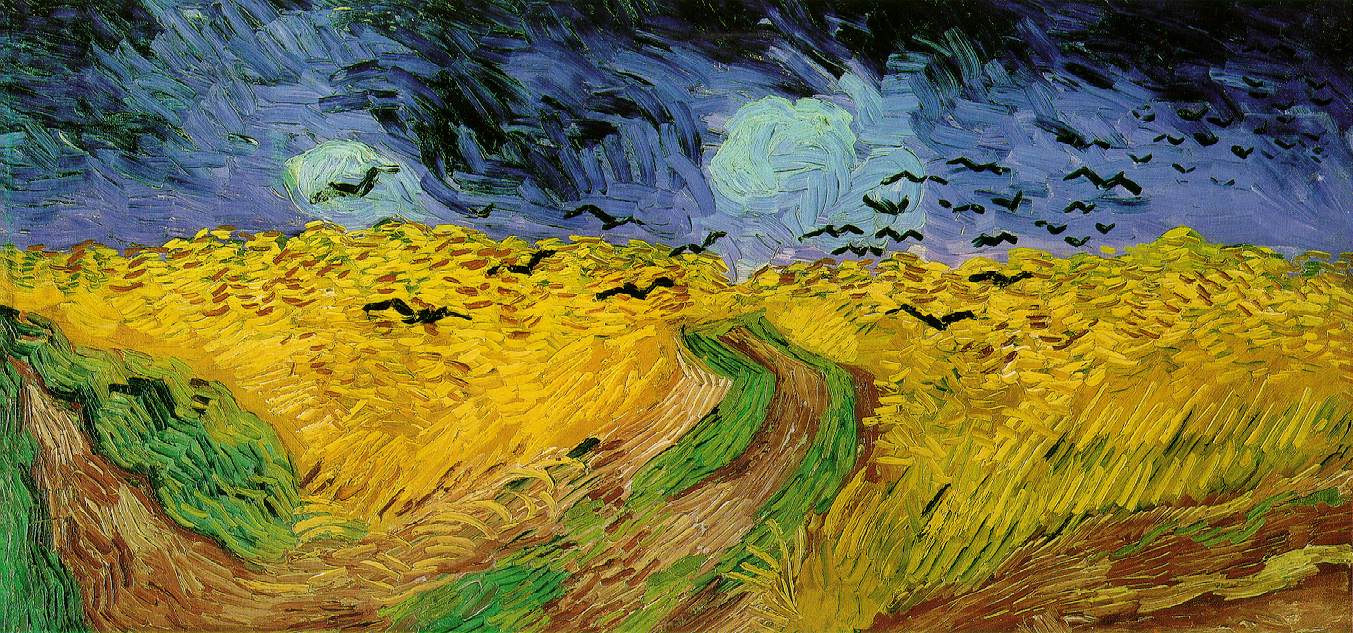
A year of accomplishments and victories: 2026

In 2025, I wanted to write a bit more poetry. It was also a year of long and frequent travels. Met new people, committed to new projects. It was a year of many directions.

This year, in 2026, I want to invest in a bit more intention to get coherence of all the stuff that I'm involved in. One of the ways of achieving this will be journaling about minor accomplishments and victories throughout the year and share it with you. 

Nazim says on living:

Living is no laughing matter:

you must live with great seriousness

like a squirrel, for example—

 I mean, without looking for something beyond and above living,

I mean living must be your whole life.

Living is no laughing matter:

you must take it seriously,

so much so and to such a degree

     that, for example, your hands tied behind your back,

your back to the wall,

or else in a laboratory

in your white coat and safety glasses,

you can die for people—

even for people whose faces you’ve never seen,

even though you know living

is the most real, the most beautiful thing.

I mean, you must take living so seriously

that even at seventy, for example, you’ll plant olive trees—

and not for your children, either,

but because although you fear death you don’t believe it,

because living, I mean, weighs heavier.


I'd like to follow this advice. So whatever squirreling I happen to be involved in, I'll take the time to write a small note on it (the very first being me learning how to spell accomplishment).  


Homeless

 The other day, at night

            she entered her house

It didn't feel like hers.

It was strange.

It felt strange.

The house

                was not to blame for this.

            Nor was she.

Yet

            the house became sheless. 


Paiva 2025

A month ago

I went

to the wooden walking paths

on the riverbank of the Paiva river.

Eight kilometers of walk, 

under scorching sun.

*

A week ago

That wooden walking path

was burnt down

by the climate crisis.

* 

The flyers said they had a plan of extension for the path. 

Fossil capital had other plans for it.


Piódão 2025

 The iconic "schist village" Piódão

        was under the siege

                of the flames.

I thought to myself:

        Should I finish the chestnut liqueur

                we bought in Piódão a couple of years ago

        before Piódão finishes,

        or should I keep it?

        If I keep it

                and if Piódão is burnt down,

                will I have the courage to drink it later?

        If I keep it, 

                will I be investing hope on Piódão

                        for no rational reason?

That was my first thought when I saw the news.

Climate, Galp, Navigator

        came later

        - a few minutes later.

Solidarity, what to do, now and here

        came later

        - a few minutes later.

The first thought was

        the Piódão that is inside my house.

I felt a bit guilty about this.

Then it passed.

The fire didn't.


Something about Palestine

 My eyes

        are tired

        of paying attention

I close my eyes

The images remain

        in front me.

My eyes might be resting

        yet my mind isn't.

My humanity aches. 


Expected

 It

        is

                not

                            that,

                                as would be expected,

                            we

                            are

                            aware

                            of our condition

                                 which,

                                as would be expected,

                                is as good

                                        as it is bad,

                        which,

                                as would be expected,

                        makes

                                it

                                        impossible

                                to improve

                                our condition.

As would be expected,

        we

                do

                        not

                                admit

                                        our

                                        solitude

                        when together.

And,

        we

                do

                        not

                                notice

                                        our

                                        unity

                        when split,

                as would be expected.


Dissatisfaction

 I cannot let myself go.

There is a question.

We are working on it,

                allegedly.

Some people mobilize

                    themselves and others,

            to do this and that,

            to get closer to a resolution,

                                            allegedly.

Some people preach,

            or teach,

            or write

        about the solution

                    - allegedly.

I am curious

        and worried.

I go and ask them,

            what the plan is.

Their answers

            are non-answers.

And

        they

                know.

*

 Things are

            not

                    under control.


Not Enough

 It was a contradiction.

I was so content

            to have her next to me

        so lucky

                to see her

                to be able to hug her.

She was so sad

        for a variety of reasons,

        including

            her dissatisfaction

                    with her life

                        which included me.

My joy turned to sadness

        sharing her feelings,

        and then to sorrow

                as I was made to face

                of my insufficiency. 


Anti-nostalgia

 A year ago, it was,

            that I met some old friends 

                    from highschool times.

Catching up with each others' lives,

            we recalled our shared past.

They

        were ecstatic.

How nice and cool and fun and relaxed and exciting

        everything was

                back then.

I couldn't.

*

 At any point in time,

            when I recall myself

                                        of a few years ago,

                I get embarrassed.

How arrogant,

        inconsiderate,

        rude,

        ignorant,

        self-entitled

                    I was

                    back then.

At any point in time,

            I get frustrated about my past self

        in a different way.

Which is perhaps the only way forward

But also:

        I have no nostalgia of the past

                as some "good old days".

*

 It is also, that,

        I am aware

        of how arrogant,

                    inconsiderate,

                    rude,

                    ignorant,

                    self-entitled

            I am probably now,

                    in brand new ways

                    that I shall discover soon

                                    - hopefully.


A visitor

 In the middle of the night

        the black cat of the house 

        jumped on the sofa

                where I was sleeping

        and started purring.

I lifted the blanket

        for her to fit in

                    and make herself comfortable

        which she did.

I fell back asleep. 


Presenting a proposal

 They listened

            approved 

            and applauded.

I lost hope

            in that same order

because I lost the argument

            in that order. 

As if to verify

        no one came to talk to me after.

I went back home.

Why did I talk?

Why did they listen?


Quick check-in as we move on – Zelensky’s tragedy

 This to my mind is such a trivial note that I’m a little confused about why it needed writing (much less by me). I wasn’t aware, until very recently, that this wasn’t obvious for folks.

As European media amplifies noise production in representation of the panic of European capitalists, let’s take stock of Zelensky’s tragedy.


§1. Let’s first set the stage.

There is an ongoing struggle for global hegemony, between NATO (a.k.a. the United States of America) and China.

In the background we can see Russia’s decades-long commercial and geopolitical convergence with China and Russia’s engagement with the Belt and Road Initiative as a bridge between China and Europe. Also in the background we have been seeing a systematically increasing escalation by NATO for “trade wars” against China, in order to maintain and recover markets and influence.

One of the proxy wars is taking place in Ukranian territories, the proxies being Russia and the European Union.


§2. This battle is won by the US.

  • The EU cut commercial ties with Russia (from oil and gas to financial flows), which were replaced by stronger ties with the US in almost all sectors.

  • The EU put in place numerous sanctions against Russia, which block the original plan of Russia serving as bridge between China and Europe.

  • In a swift move, the NATO imposed total censorship to Russia Today (from websites to social media), the main propaganda tool of the Russian government, in order to control the entire narrative directed at Western audiences. Thereby, the only facts and opinions available are passing through the lenses of Western media first.

  • China abstained (once again) and abandoned Russia in Ukraine.

  • Putin lost the Wagner group. Plus and consequently, lost capacity to participate in other conflicts (e.g. complete abstention in the Congo massacres).

  • NATO won Finland over.

  • As a bonus and to its own surprise, NATO won another proxy-war, in Syria.

  • Also as a bonus: Apparently the Ukrainian government is so tired that it can be forced into a neocolonial deal directly with the US, without any mediation through NATO or the EU.


§3. Trump said he would end this war. (This is partly because Trump himself is on the same side as Putin, and perhaps there might be a more-than-personal shift in geopolitics.)

Trump promised this to its electoral base and to working class people who are tired of wars. He lied, of course, given his passion for genocide in Palestine.

But he managed to promise the end of war and he manages to deliver it because it is won.

To this effect, Trump told Zelensky: “Look, my war is over and I won. Now I’ll have to offer something to Putin for him to save face, and I’ll keep the rest of your territory.”

Probably the offer to Putin is “self-determination” in the regions occupied by the Russian army (via the referendums that Putin has been announcing).

In the meantime, Trump transformed the past US military support into loans. In other words, he declared overnight that Ukraine owed billions of dollars to the US. In return, he initially proposed the mine deal, but it should be the beginning of a neocolonial process.


§4. Russia lost this war on the day China abstained (this was, I think, on the second week of the invasion). From that moment on, Putin has been insisting – with weekly declarations – in a diplomatic solution and negotiations. (Of course, the BBC or the Guardian wouldn’t reproduce these parts of his discourse, available in Russia Today, which in turn is unavailable for people in Europe.)

The hot war itself is in deadlock. Two weeks ago, Euronews made the news that two Russian drones killed 2 people and injured 1 person in Ukraine. This, according to Euronews, was one of four main headlines of the day. In other words, the state of war in Ukraine is currently as mortal as driving a car in Portugal. Until the deal is signed, further operations and bombings will serve to increase his hand in negotiations.

Putin cannot end this war without declaring victory, because his domestic legitimacy depends on the imperial power he represents. That’s why he needs a photo in which he is treated as equal to NATO. Trump offers him this.


§5. Zelensky unfortunately still believes that this has to do with him. But he also understands that the only way of saving his own career is to insist in his chauvinistic nationalism to consolidate his base. (Recall that Zelensky’s party belongs to the alliance right-wing market fanatics, which includes FDP in Germany and Iniciativa Liberal in Portugal.) Both of these aspects went pretty poorly in the last weeks:

  • Ukraine is about to be divided into two neocolonialized regions, between the US and Russia. A good part of its infrastructure is destroyed, and its people is tired.

  • After the communication crisis with Trump and Vance, the mobilizations in Kiev in support of Zelensky were extremely weak.

  • His attitude towards Trump was a disaster for Zelensky. All his team was crying as they left the White House. Zelensky came out as a subsidy-dependent “warmonger”, who wouldn’t stop using Western money and who wouldn’t think about solutions. This attitude proved Russian nationalists and Trump’s base to be right (in their own heads), consolidating support for Putin and Trump.


 §6. European bourgeoisie lost influence with this war.

The US won everything, and the EU couldn’t establish any autonomous position: all the terms of the discussion were set by the US and NATO.

They are now in panic. They are holding meetings after meetings, but those meetings don’t have any agenda nor any outcomes other than press conferences.


§7. China hasn’t been proactive in terms of territorial division in the world. It left Libya to be invaded ten years ago; abandoned Syria to itself; abstained completely about Ukraine; and isn’t doing much about the societal collapse in eastern parts of Congo. (All of these are part of the proxy wars between the US and China.)


§8. Obviously, like any other imperial war, the peoples are the ones sure to be on the losing side. The war in Ukraine effectively ended in the last weeks. From here on, the suffering of the Ukrainian people will be the “normal” suffering of exploitation, injustice, inequality and climate collapse.

It was heart-breaking that we couldn’t establish an alternative from the bottom and to the left. (The socialists were banned, some anarchists joined the resistance but couldn’t build up a counter-hegemonic force.) The real options then ended up between Putin’s extreme-right invasion, local extreme-right and Nazis supported by the EU, and the extreme-right of Zelensky. Among these options, the working people will remain on the losing side.


§9. From here onward, we are to hear more warmongering and more militarization in Europe, more money to the military complex taken from public services, and more borders for people. The European Commission doesn’t have a clear direction because there is no consensus among the European capitalists. There is no consensus because they don’t have an alternative to the US. They had an option to abstain in the war in Ukraine, instead they aligned with the US, and now they reached the end of the dead-end street that they had being walking through.

They are playing a hand they don't have. 

This is therefore an opportunity for the European left. A clear anti-militarization agenda (refusing any increase in military funding or military capacity) and an accompanying anti-war campaign (connecting Ukraine and Palestine) are the only ways out. This strategy was the right one also a couple of years ago, but now it has much more leverage in Europe.


A contradiction in five acts

From the river

We should focus on bread-and-butter issues.

Those are the ones

        that people feel in their daily lives

    and those will mobilize.


End genocide four thousand kilometers away

You cannot mobilize people

                through values and abstractions.

You must start from their

                direct

                    lived experience.

That's what will build up anger.


Tens of millions take the streets for more than one year

Complex issues

        that involve global politics

        as well as knowledge of history

    cannot mobilize the masses.

You need

        simple,

            immediate problems

    to agitate.


Four thousand pro-Palestine protesters arrested eleven kilometers away from Palestine

You can't rely on

        people's empathy

                    or solidarity

        to build a persistent mass movement.

You need to address

        people's direct suffering.


To the sea

Internationalism is 

    at most

        solidarity between national struggles.

A class consciousness for an international struggle

            does not exist.

People won't risk their own well-being

        without an immediate personal gain at sight.


Exam stress

When you write

            - I was told -

        you should write

        as if

            a worker is checking on you

                        over your shoulder.

You should be careful

            with every choice of

                    word, preposition, grammatical tenses.

Or else

        you might fail

            your class.

So I was told

And so I have written

Until a few years ago

When

The examiner

        wasn't behind me

        but instead

        in front of me.

More like an oral exam

            rather than written.

She asked me:

            - What is the solution?

I parroted some trivialities

            which I read in textbooks,

            capitalism, bourgeoisie, alienation, hegemony, class consciousness

                - the usual stuff.

She wasn't satisfied:

            - What's the answer?

My eyes shined.

            I had studied that part:

            revolution!

She was even less satisfied:

            - Show your work.

*

From here

            to there,

        step by step

                each step with rigorous proof.

My blood pressure spiked.

        I could feel my heart in my head.

What the hell?

A centuries-old open question

            could not be in an exam

        Could it?

Perhaps.

It's the finals, after all.

You never know.

*

But also

        you do know

        I do know

Facing the examiner

            facing the class,

        class is also facing me.

We have a problem to solve

                    or else we'll fail.